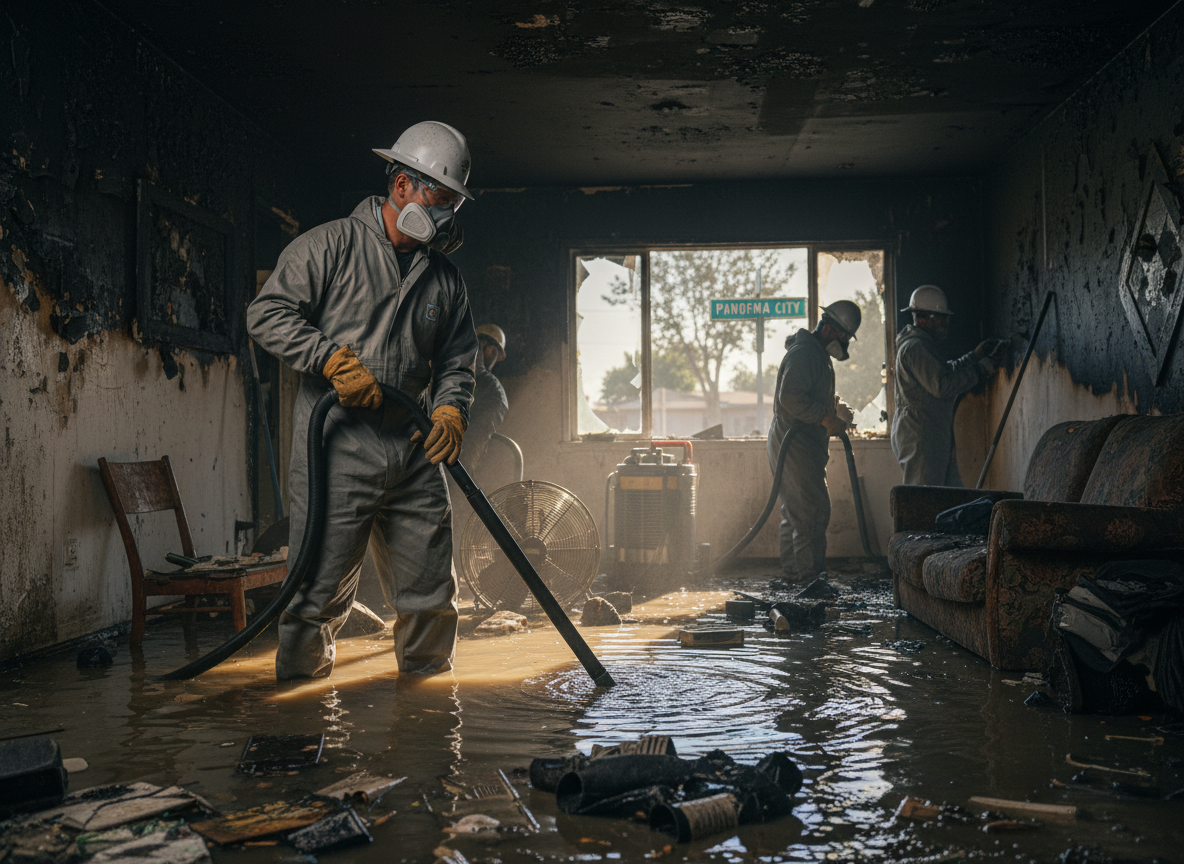
Panorama City homes built in the 1950s and 1960s often have plaster walls and original electrical systems that complicate fire and flood work. Hot dry summers increase fire risk, and when firefighters use water the moisture soaks into lath and plaster, creating hidden pockets that later cause mold if not dried properly. Crews must open walls in multiple rooms and use moisture meters to find saturation behind cabinets and under subfloors common in these older tracts.
Los Angeles County building codes require permits for any structural drying that affects load-bearing elements. In neighborhoods near Sepulveda Basin, high water tables mean floodwater from suppression can migrate under slabs, so extraction must include subfloor monitoring for weeks after the initial event. Technicians document every step because insurance adjusters in the area routinely request photos of hidden damage before approving drywall removal.
Smoke from structure fires travels through shared attic spaces in Panorama City duplexes and triplexes, carrying soot into neighboring units. Restoration includes sealing HVAC systems immediately to prevent cross-contamination, followed by HEPA air scrubbing and thermal fogging. Owners near Panorama Mall frequently report odors returning weeks later when summer heat pulls residue out of wall cavities that were not fully cleaned.
Technician insight
In Panorama City, the thing that catches most people out with fire and flood restoration is how quickly water from suppression soaks into the old plaster and lathe in 1950s tract homes. Once summer heat returns the moisture moves into attics shared with neighboring units near Van Nuys and North Hills, and you end up chasing odor weeks later because the initial extraction never reached the cavities behind the cabinets.
Fire and water damage on Nordhoff Street
A kitchen fire in a 1962 Panorama City single-family home spread smoke through the attic and sent water into the living room subfloor. We found saturation under the original hardwood extending into two bedrooms. Extraction and targeted wall removal followed by ten days of drying prevented mold, and the home was cleared for rebuild without odor complaints the following month.
How it works
- 1
Emergency Board-Up and Water Extraction
Secure the property and remove standing water from firefighting efforts within hours of the call.
- 2
Moisture Mapping and Demolition
Use meters and infrared cameras to locate hidden water in walls, floors, and ceilings before selective removal.
- 3
Drying and Dehumidification
Set up commercial air movers and dehumidifiers while monitoring daily humidity levels in Los Angeles County conditions.
- 4
Smoke and Odor Removal
Clean surfaces, apply sealants, and treat air to eliminate soot and smoke residue throughout the structure.
- 5
Rebuild and Final Clearance
Restore damaged areas to code and perform final walkthrough with the homeowner before closing the job.
Pricing
Pricing varies by extent of hidden water damage and smoke migration; most jobs in Panorama City require multiple site visits for proper drying.