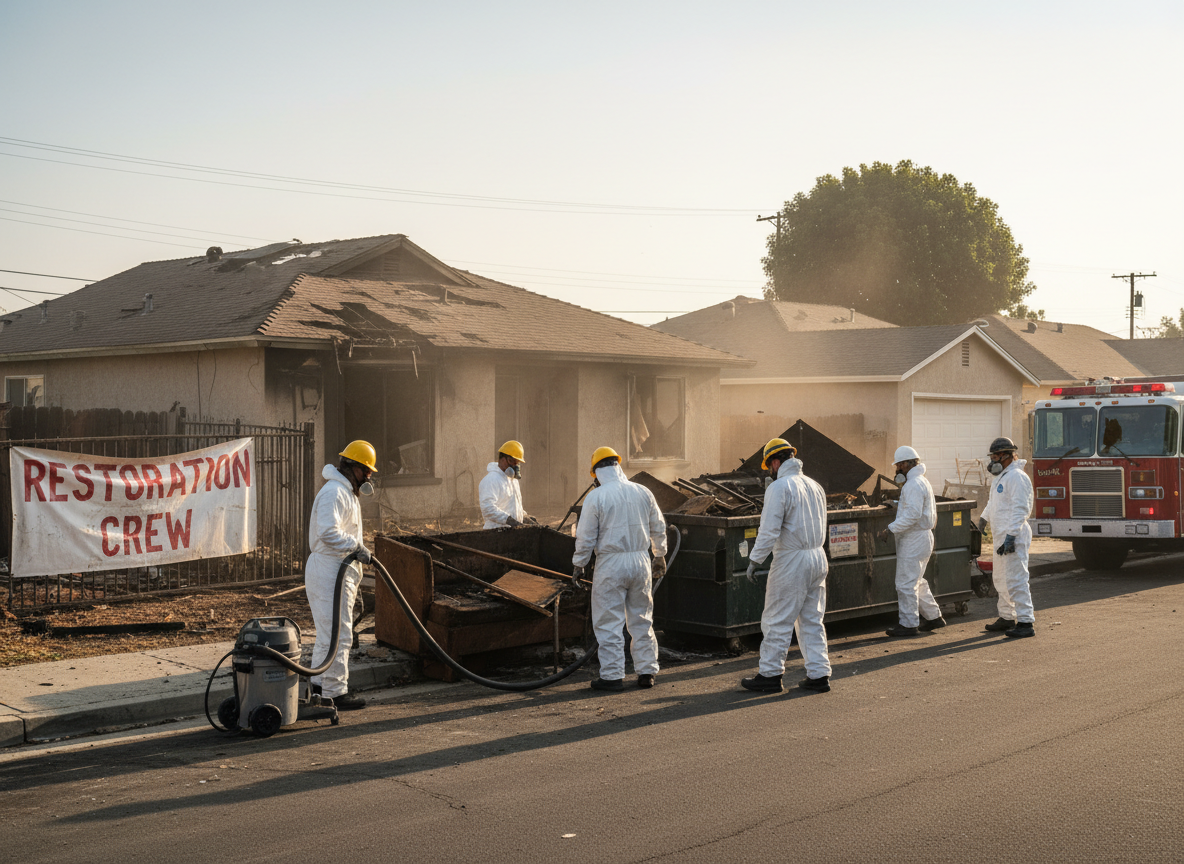
Panorama City homes built in the 1950s and 1960s often feature stucco exteriors and forced-air systems that pull smoke deep into wall cavities during the hot, dry summers common in Los Angeles County. When a fire occurs nearby, soot travels through those ducts and settles on every horizontal surface, including inside cabinets and behind baseboards near the Sepulveda Basin. Standard household cleaning leaves behind acidic residues that continue to corrode metal and discolor paint weeks later.
Technicians begin by mapping airflow paths from the fire origin, then isolate HVAC zones to prevent cross-contamination into unaffected rooms in North Hills or Van Nuys properties. HEPA vacuums and specialized sponges remove dry soot first; any water introduced for emulsification must be extracted immediately because the Mediterranean climate offers little humidity to aid natural drying. Odor neutralization follows using hydroxyl generators rather than ozone machines that can damage electronics common in local households.
Residents near Panorama Mall frequently report lingering smells in clothing and upholstery even after visible soot is gone. In these cases, contents are inventoried, bagged, and taken off-site for separate treatment while structural surfaces receive multiple passes with pH-neutral cleaners. Final clearance testing checks for residual particulates that could trigger respiratory issues once the home is reoccupied.
Technician insight
In Panorama City, the thing that catches most people out with fire damage clean up is how the dry summer winds push soot through the original 1960s ductwork in stucco homes near Nordhoff Street, leaving residue inside walls that only shows up after the first rain.
Smoke Intrusion After Nearby Structure Fire
A kitchen fire two doors down sent smoke through shared attic space into a 1958 Panorama City home. Soot had traveled the full length of the forced-air ducts and coated insulation in the attic. Crews sealed the system, removed and cleaned all registers, then treated the attic with hydroxyl generators before reinstalling insulation.
How it works
- 1
Site Assessment
Inspect all affected rooms, test HVAC runs, and document soot migration patterns through the home's original ductwork.
- 2
Containment Setup
Seal doorways and isolate ventilation zones to stop soot from spreading into unaffected areas of the Panorama City property.
- 3
Soot Removal
Use HEPA vacuums and dry-cleaning sponges on walls, ceilings, and contents before any wet cleaning begins.
- 4
Odor Neutralization
Deploy air scrubbers and hydroxyl generators to break down smoke molecules embedded in porous materials.
- 5
Final Clearance
Perform surface testing and return cleaned items once no visible residue or odor remains.
Pricing
Cost depends on square footage affected, HVAC complexity, and whether contents require off-site treatment; upfront quotes provided after inspection.