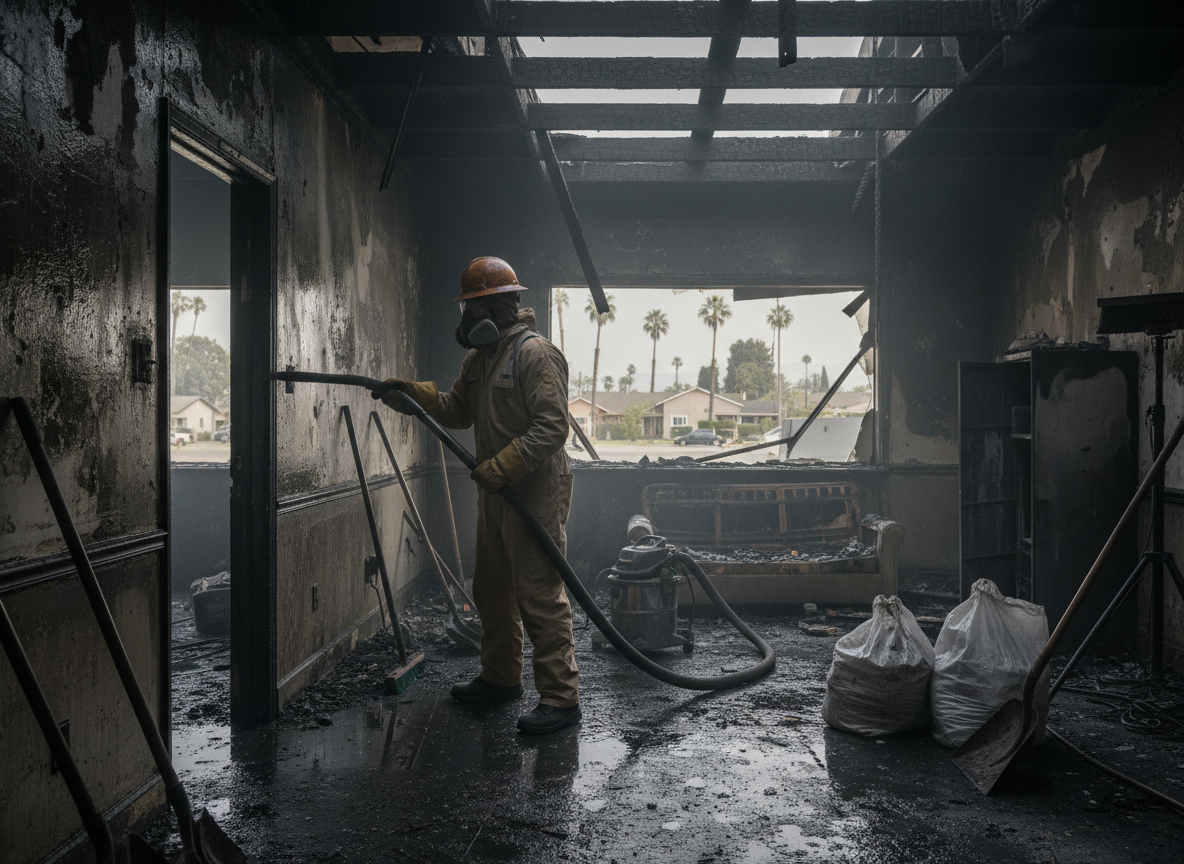
Panorama City homes built in the 1950s and 1960s often feature stucco exteriors and open attics that allow smoke to travel quickly during the hot, dry summers typical of the Mediterranean climate here. When a fire starts near the Panorama Mall or along Nordhoff Street, crews must account for how soot bonds to textured ceilings and travels through shared walls into adjacent units in Van Nuys and North Hills. Delaying response lets acidic smoke etch metal fixtures and HVAC coils, especially when winds carry embers toward the Sepulveda Basin.
Los Angeles County building codes require permits for any structural repairs after fire events, and older Panorama City properties frequently contain knob-and-tube wiring that complicates safe power restoration. Restoration teams begin by establishing negative air pressure to keep soot from migrating into unaffected rooms, then use specialized sponges and HEPA vacuums on porous surfaces before applying odor-neutralizing agents. Water used during suppression can pool in the clay-heavy soil around the Panorama City Branch Library, creating hidden moisture pockets that must be dried to prevent secondary mold growth.
Technicians familiar with Sylmar and North Hills terrain know that hillside properties can channel smoke upward into eaves while flat-roof apartments trap it in ceiling cavities. Each job includes documenting pre-existing conditions at the 14530 Nordhoff St base before work starts so homeowners have clear records for insurance adjusters. Final clearance testing checks for residual particulates on surfaces and in ductwork to confirm the structure is safe for re-entry.
Technician insight
In Panorama City, the thing that catches most people out with Emergency fire damage restoration is how the dry summer winds push smoke deep into the open attic spaces of 1950s stucco homes near the Sepulveda Basin, then the clay soil holds suppression water so long that hidden rot appears weeks later if drying is skipped.
Kitchen fire in a Nordhoff Street duplex
A cooking fire spread soot through the attic into the neighboring unit. Inspection revealed smoke residue inside shared ductwork and water trapped under the slab. Crews contained the area, cleaned all surfaces, dried the subfloor, and restored airflow so both families returned within ten days.
How it works
- 1
Initial Assessment and Safety
Arrive within the hour, secure the structure, and document all visible fire, smoke, and water damage while wearing full PPE.
- 2
Containment and Air Filtration
Set up barriers and negative-air machines to stop soot migration into clean areas of the home or neighboring units.
- 3
Soot Removal and Cleaning
Remove charred materials, clean surfaces with appropriate agents, and treat HVAC systems to eliminate embedded odors.
- 4
Drying and Structural Repairs
Extract remaining moisture, replace damaged drywall and insulation, then coordinate permitted rebuild work with local inspectors.
Pricing
Cost depends on square footage affected, smoke penetration depth, and whether structural repairs or contents cleaning are required.