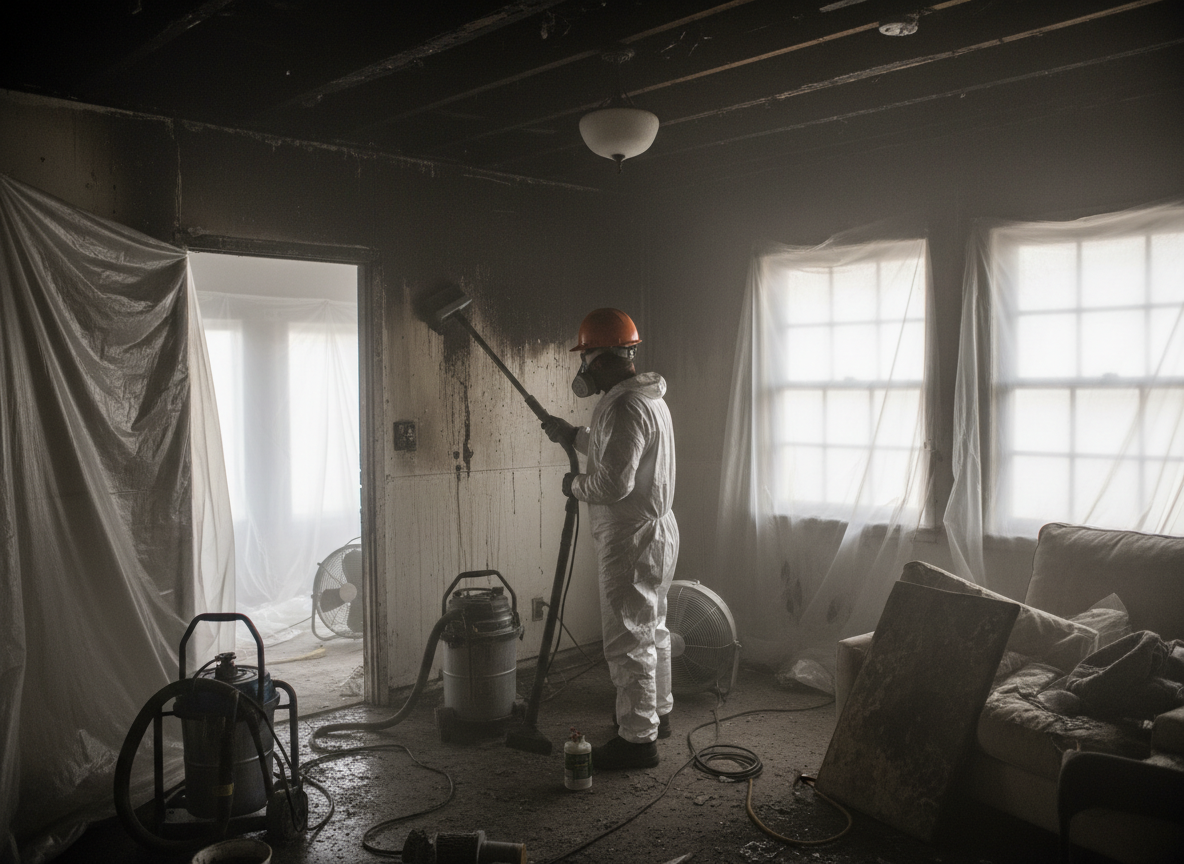
Panorama City homes built from the 1950s through the 1970s often contain lath-and-plaster walls and older HVAC ductwork that trap smoke particles deep in cavities. After a fire the dry Mediterranean summers pull residual odors back into living spaces within days, so crews must seal and treat every joint before drywall replacement. Work near the Sepulveda Basin also means watching for wind-driven ember re-ignition that can travel across open lots into neighboring yards in Van Nuys and North Hills.
Smoke from kitchen or electrical fires travels upward through balloon-framed walls common in the area and deposits acidic residue on copper wiring and metal ductwork. Left untreated, that residue corrodes connections and creates future electrical faults. Restoration teams test pH levels on every surface and neutralize before sealing, especially in single-story ranch homes where attics sit directly above living areas and hold heat longer during summer months.
Los Angeles County permit rules require documentation of any structural member replacement after fire exposure. Crews photograph each removed joist or stud and note char depth so inspectors can verify code compliance without extra site visits. This step becomes critical when a fire starts near the Panorama Mall commercial corridor and spreads into attached residential units where shared walls complicate containment.
Technician insight
In Panorama City the thing that catches most people out with fire and smoke damage restoration is how quickly the hot dry summer air pulls smoke back out of the walls once the structure starts to cool. Older plaster homes here trap residue in the cavities between studs, and if you don't neutralize the pH before you close the walls the smell returns every time the Santa Ana winds pick up. We always test the ducts running to the Sepulveda Basin side of the neighborhood because those runs stay cooler and hold moisture longer.
Kitchen Fire Smoke Migration in North Hills
A cooking fire in a 1960s ranch home sent smoke through the attic and into two bedrooms. Inspection showed acidic residue on HVAC registers and inside the plaster walls. Crews opened the cavities, neutralized surfaces, cleaned the ducts, and reinstalled with new insulation before county final inspection.
How it works
- 1
Emergency Board-Up
Secure the structure with plywood and tarps to prevent weather intrusion and unauthorized entry while assessment begins.
- 2
Smoke and Soot Removal
Use HEPA vacuums and specialized cleaners on all surfaces, including ductwork, to extract acidic particles before odor sets in.
- 3
Odor Neutralization
Apply thermal fogging and ozone treatments calibrated for the home's volume and material types found in Panorama City housing stock.
- 4
Reconstruction and Final Clearance
Replace damaged materials, repaint with odor-sealing primers, and perform air-quality testing before returning keys to the owner.
Pricing
Upfront written quotes provided after on-site inspection; final cost depends on square footage affected, materials involved, and whether HVAC or attic spaces require treatment.