2026-10-16 ·
Handling Secondary Water Damage After Fire Restoration in the Valley
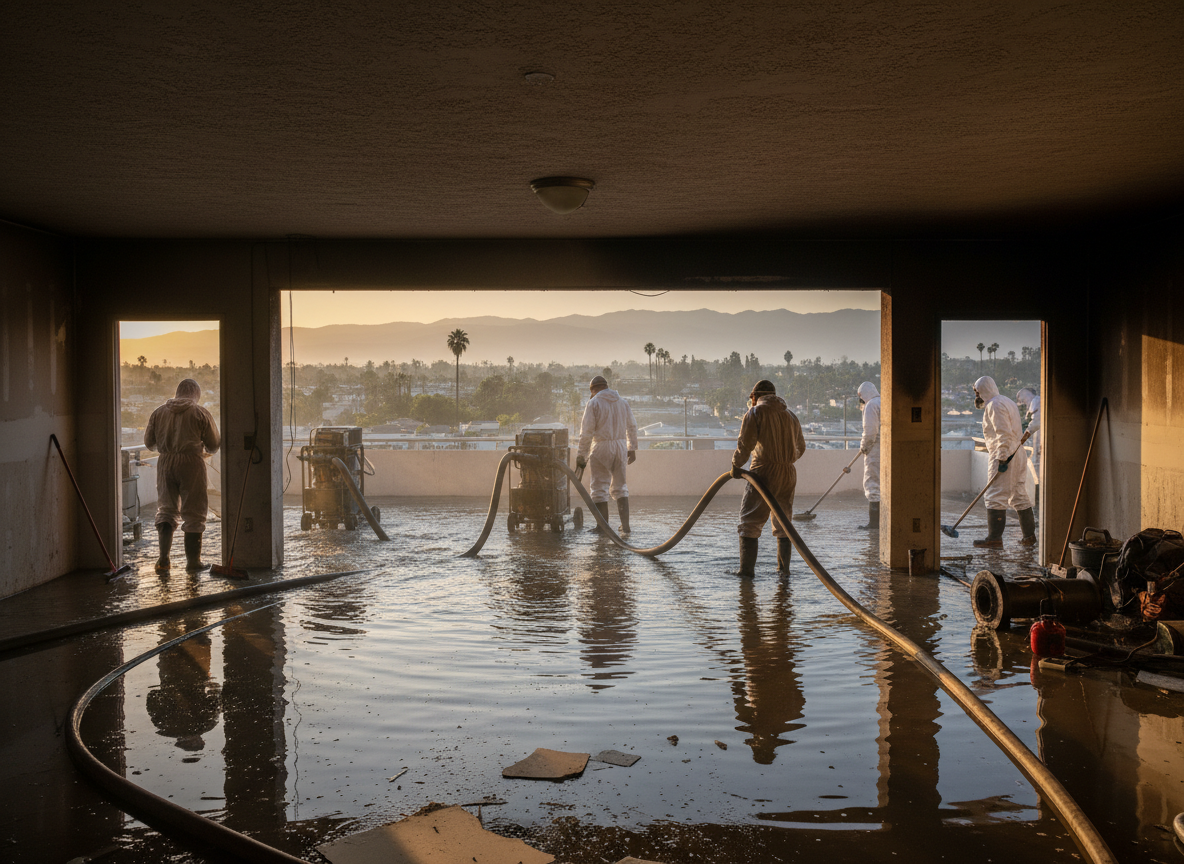
Secondary water damage after fire restoration in the Valley typically surfaces within 24-48 hours and needs extraction plus dehumidification within 72 hours to avoid mold in wood-framed homes common to Panorama City, Van Nuys, and North Hills.
Sources of Secondary Water in Local Fires
Fire crews use thousands of gallons to suppress blazes in Panorama City residences, saturating drywall, subfloors, and insulation. In Mediterranean climate conditions with hot, dry summers, standing water evaporates from surfaces quickly but lingers in wall cavities and crawl spaces of 1950s-1970s housing stock. Sepulveda Basin humidity spikes after storms can compound trapped moisture near the Panorama Mall area. Kitchen and electrical fires often route water into attics where it migrates downward through ceiling joists.
Immediate Assessment Steps
Walk the property room by room starting at the fire origin and trace water paths outward. Use moisture meters on baseboards in Panorama City homes to detect readings above 15 percent that signal hidden saturation. Check under vinyl flooring and carpet pads in North Hills properties where slab foundations can hold water against concrete for weeks. Document every affected area with photos before any drying equipment arrives.
Drying Equipment and Timelines
Industrial air movers and dehumidifiers run 24/7 for 3-7 days depending on square footage and material porosity. In hot summer months, units positioned near open windows in Van Nuys pull drier outside air to speed evaporation from plaster walls. Monitor daily with pin meters until readings drop below 12 percent; failure to reach this threshold in Los Angeles County homes often leads to recurring odor issues. Fire and flood restoration crews coordinate this sequence after initial smoke remediation.
Mold Risks in the San Fernando Valley Climate
Mold colonies can form in 48-72 hours when relative humidity stays above 60 percent inside structures. The Valley's dry summers mask surface dryness while interior pockets near the Panorama City Branch Library stay damp longer due to limited airflow in older layouts. Cellulose insulation in attics absorbs and holds water, creating perfect growth conditions once temperatures moderate. Regular checks every 12 hours during the first three days prevent colonies from spreading to adjacent bedrooms.
Coordination With Ongoing Fire Restoration
Water removal must finish before soot cleaning begins to avoid redistributing contaminants. Structural repair after fire teams inspect for compromised joists once moisture levels stabilize. Odor removal after fire follows only after all wet materials are removed or fully dried, preventing trapped smells in rebuilt sections. Homeowners in Sylmar and Arleta often schedule these phases sequentially to meet insurance documentation requirements.
Practical Follow-Up in Mid-Century Homes
After equipment removal, open windows during cooler evening hours to maintain airflow in Panorama City properties. Replace saturated insulation in exterior walls rather than attempting to dry it. Removing lingering smoke odor from mid-century homes in Panorama City provides additional guidance on post-drying ventilation strategies suited to local construction. Schedule a final walkthrough 30 days later to confirm no hidden moisture remains.