2026-10-16 ·
Removing Lingering Smoke Odor from Mid-Century Homes in Panorama City
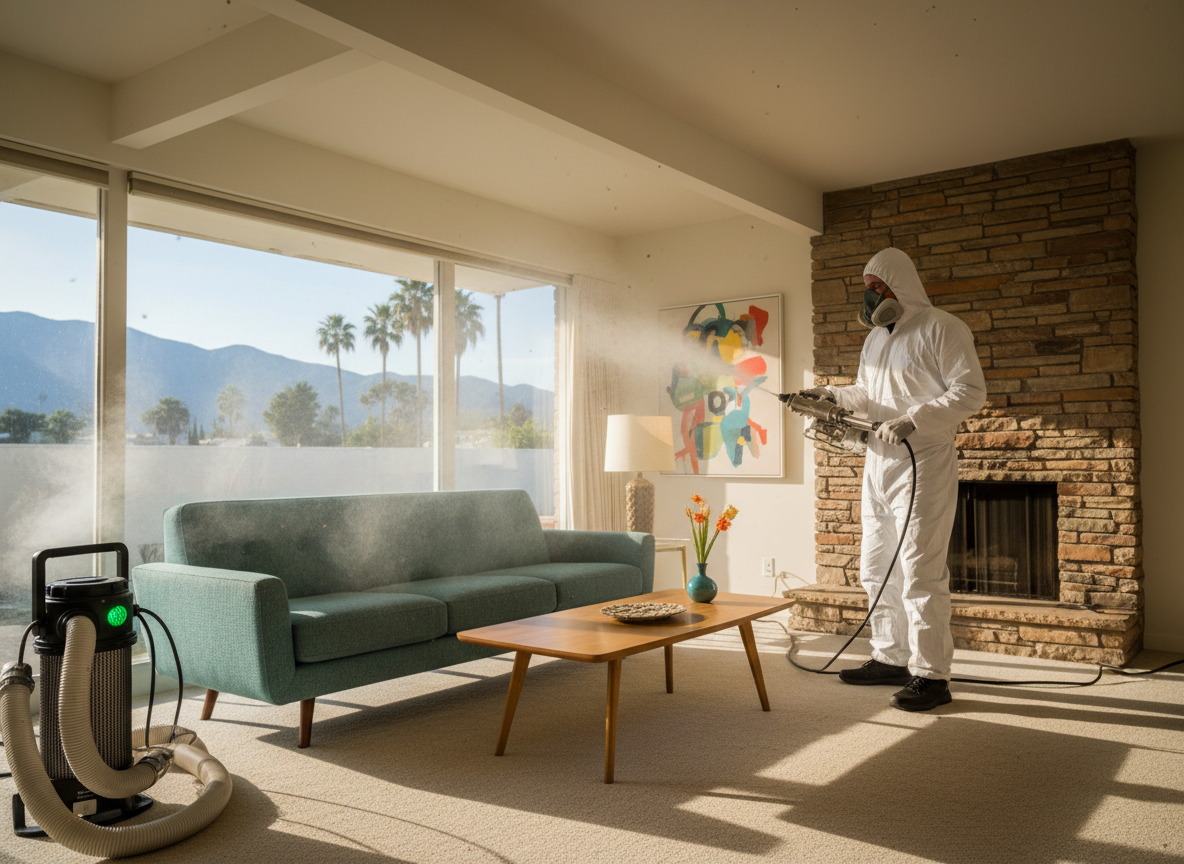
Removing lingering smoke odor from mid-century homes in Panorama City starts with ozone generators running 48 to 72 hours followed by thermal fogging to neutralize residues embedded in original plaster and hardwood. This sequence breaks down odor molecules at the molecular level rather than masking them, and it works best when performed before any repainting or flooring replacement.
Identifying Odor Sources in 1950s-1960s Construction
Panorama City neighborhoods such as those near Panorama Mall contain many ranch-style homes built between 1950 and 1965 with single-layer plaster over wood lath and minimal insulation. Smoke particles settle deep into these porous surfaces and into the cavities behind built-in cabinets common in that era. Hot, dry summers accelerate odor re-release when temperatures climb above 90 degrees, pulling trapped volatiles back into living spaces. Technicians begin by mapping affected zones with a PID meter, then isolate HVAC returns that often spread odors into multiple rooms. Addressing these hidden reservoirs first prevents the smell from returning weeks later.
Step-by-Step Odor Neutralization Process
- Remove all porous contents including curtains, carpet pads, and attic insulation that cannot be cleaned.
- Run hydroxyl generators for 24 hours to treat air and surfaces without ozone's material restrictions.
- Apply thermal fogging with odor counteractants calibrated for wood and plaster substrates.
- Follow with HEPA air scrubbing at 500 CFM per 1,000 square feet for a minimum of 48 hours.
- Test remaining surfaces using a blacklight and olfactory inspection before final clearance.
Each step is documented with before-and-after readings so homeowners in Van Nuys or North Hills can verify results. Odor removal after fire often integrates with these protocols when the original fire event also involved water used for suppression.
Local Climate and Housing Factors That Extend Treatment Time
Los Angeles County's Mediterranean climate brings extended dry periods that dry out smoke residues unevenly, leaving pockets of odor in subflooring and behind baseboards. Mid-century homes here frequently have crawl spaces with limited ventilation, allowing humidity spikes during rare winter rains to reactivate smells. Crews therefore schedule extra drying time with dehumidifiers set to 35 percent RH before sealing surfaces. Homes near the Sepulveda Basin experience slightly higher ambient moisture, which can lengthen the overall project by two to three days compared with properties farther east in Sylmar. Smoke remediation accounts for these micro-climate differences by adjusting equipment placement and monitoring intervals.
When to Combine Odor Work with Other Restoration
Lingering smoke odor often signals incomplete soot removal from earlier phases. In such cases, pairing odor neutralization with soot removal prevents the smell from returning after new finishes are installed. Homeowners also review what affects the cost of smoke damage restoration in Los Angeles County to understand how square footage, material types, and the need for HVAC cleaning influence timelines. For properties that sustained both fire and water intrusion, handling secondary water damage after fire restoration in the valley provides guidance on sequencing drying before odor treatment begins. The 24/7 team operating from 14530 Nordhoff St can mobilize equipment within hours to keep projects on schedule.